Sagrada Familia History & Facts: Antoni Gaudí's Masterpiece
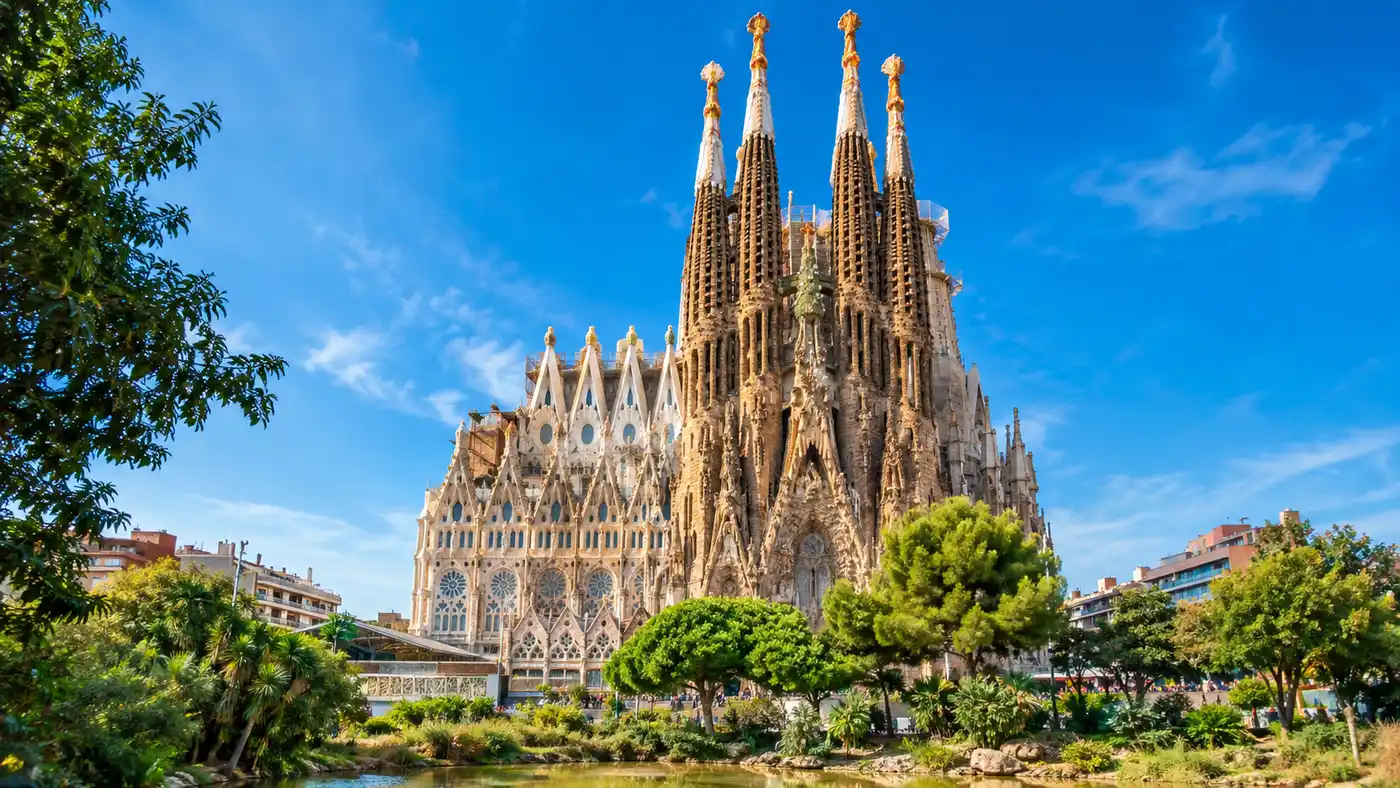
I still remember the first time I walked up the metro stairs at the Sagrada Família station. You turn the corner, haul your bag over the concrete curb, and suddenly this stone monster looms over the tree line. It looks less like a Catholic church and more like a calcified prehistoric organism frozen mid-breath. Digging into the actual sagrada familia history reveals that this towering wonder was almost never built like this at all. It began as an ordinary neighborhood project, headed by an entirely different man with far more modest ambitions.
Most travelers know it is taking forever to finish. What people usually miss is the sheer stubbornness that kept it rising through anarchist bomb plots, a devastating civil war, destroyed master plans, and decades of near-empty bank accounts. Here is the real story of how a small parish dream turned into Antoni Gaudí's life obsession, alongside the peculiar details carved into its towering walls.
Book your sagrada familia experience:
The Beginnings: Why Was Sagrada Familia Built and Who Started It?
The whole enterprise kicked off in 1882. A devout Barcelona bookseller named Josep Maria Bocabella had just returned from a pilgrimage to the Vatican. He felt shaken by the spread of secular politics, modern industry, and revolutionary ideas across Catalonia. Bocabella wanted to construct an expiatory temple, a church funded purely by private donations to atone for the sins of the city. He named it the Temple Expiatori de la Sagrada Família, dedicated to the Holy Family of Jesus, Mary, and Joseph. In Catholic tradition, an expiatory temple accepts no state subsidies or corporate loans. Every cent has to come from the pockets of ordinary worshippers, which explains a lot about why progress crawled along for well over a century.
Bocabella hired Francisco de Paula del Villar as the original architect of Sagrada Familia. Villar had a safe, conventional mind. He drew up a standard neo-Gothic church with pointed arches, slim buttresses, and standard-issue stained glass. Workers broke ground on March 19, 1882, laying the cornerstone for the subterranean crypt. Villar lasted barely a year on the job before getting into bitter arguments with the construction council over material costs and vault designs. He walked off the site in late 1883, leaving an open trench in the ground and a confused patron holding the bill.
That was when Antoni Gaudí entered the picture. He was only 31 years old, full of radical ideas, and had barely made a name for himself in town. Bocabella's advisors took a gamble on him. Gaudí accepted the commission, initially intending to finish Villar's crypt according to the existing plans. Within months, he discarded the original blueprinted nave and redesigned the entire future basilica into a soaring, organic forest of stone. The project consumed the rest of his life.
Note: Because it is officially an expiatory temple, ticket fees and individual gifts still pay for every sack of cement and crane rental today. When you buy an entrance ticket, you are directly paying the construction crew.
Antoni Gaudí's Sagrada Familia: Turning a Church into a Stone Forest
Gaudí hated straight lines. He looked at nature and noticed that trees, bones, shells, and mountain ridges never form clean right angles. He figured that if a building honors God, it should mimic the structural genius of the natural world rather than rigid human geometry. He threw out the flying buttresses common in medieval European cathedrals, calling them stone crutches that cluttered up the exterior light. Instead, he engineered leaning interior columns that branch outward near the top like tree trunks.
These columns carry immense weight while funneling natural daylight down through custom glass skylights. Gaudí spent over a decade tinkering with hanging string models in his on-site workshop. He tied tiny buckshot weights to hanging cords, allowing gravity to pull the strings into naturally balanced catenary curves. He then placed a mirror underneath the hanging nest of string to view what the structure would look like right side up. This allowed him to design stone vaults that stand under pure compression without needing bulky side walls to stay upright.
By 1914, Gaudí abandoned all his other private architectural commissions. He stopped working on Park Güell, stepped away from private townhouses, and moved his living quarters into the dust and sawdust of the Sagrada Família workshop. He grew scruffy, lived on goat milk and dry bread, and walked around town in patched trousers held up by safety pins. Passersby mistook him for a tramp. He knew he would never live to see the project finished. When church officials pushed him to speed up the work, he shrugged and gave his famous reply: "My client is not in a hurry."
Pro tip: Stand directly under the crossing beneath the main nave ceiling around 4:00 PM on a clear afternoon. The slanted sunlight through the west-facing orange stained glass paints the concrete forest in vibrant amber fire.
The Tragic End of Gaudí and the Sagrada Familia Crypt
The tragedy struck on June 7, 1926. Gaudí had just left the construction site for his daily evening walk toward the Church of Sant Felip Neri in the Gothic Quarter, where he regularly prayed and confessed. While crossing the Gran Via de les Corts Catalanes, he was struck by a passing number 30 tram. Because he carried no money, wore ragged clothes, and possessed zero identification papers, several cab drivers refused to haul him to the clinic, assuming he was an impoverished vagrant.
A passing policeman eventually loaded him into a shared cab and took him to the Hospital de la Santa Creu, an overcrowded municipal hospital for the poor. By the time his friends and assistant architects recognized him lying in a communal ward, internal bleeding and head trauma had taken their toll. Antoni Gaudí died three days later, on June 10, 1926, at the age of 73. Half of Barcelona flooded the streets to mourn him during an enormous funeral procession that wound from the hospital to the unfinished church.
Gaudí was laid to rest inside the subterranean crypt where construction originally started 44 years earlier. If you visit the lower levels today, you can look down into the Chapel of Our Lady of Mount Carmel to see his simple tombstone slab set flush into the floor. The crypt itself survived several close calls over the ensuing decades, remaining an active parish church under the feet of millions of sightseeing tourists.
A few essential timeline moments define how this site evolved from an open field into the city icon we see now:
- 1882: Francisco de Paula del Villar lays the initial cornerstone for the crypt on Saint Joseph's day.
- 1883: Antoni Gaudí takes over leadership and redesigns the entire superstructure from scratch.
- 1925: The first bell tower on the Nativity Facade, dedicated to Saint Barnabas, is completed just months before Gaudí's death.
- 1936: Spanish Civil War fighters sack the workshop, burning Gaudí's original drawings and smashing his scale plaster models.
- 2010: Pope Benedict XVI consecrates the church as a minor basilica, opening the fully enclosed interior for daily worship.
Book your sagrada familia experience:
Fascinating Sagrada Familia Facts and Architectural Dimensions
People often ask how tall the finished church will stand. Once the central Tower of Jesus Christ receives its crowning cross, the building will reach 172.5 meters. Gaudí chose that exact number because nearby Montjuïc hill rises 173 meters above sea level. He firmly believed that no human creation should ever overtop the natural creation of God. That single deliberate meter of restraint tells you everything about his worldview.
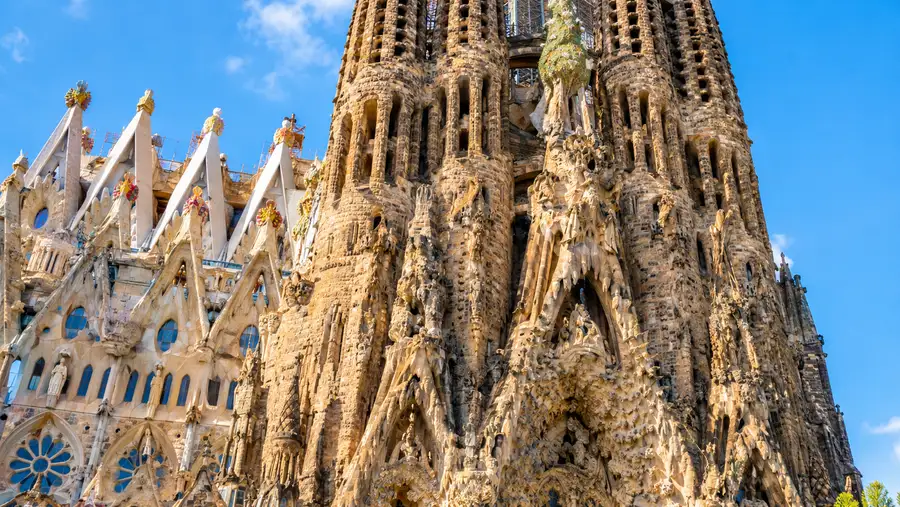
The exterior tells three biblical chapters across three distinct facades. The Nativity Facade faces east toward the morning sun, celebrating life, birth, and nature. Gaudí oversaw this portion directly, packing it with stone leaves, barnyard animals, and birds native to Catalonia. You can study our detailed breakdown of the Sagrada Familia facades to unpack the hidden stories within these walls. The western Passion Facade, finished decades later by sculptor Josep Maria Subirachs, looks intentionally bone-dry, harsh, and skeletal to convey suffering. The massive southern Glory Facade remains heavily under construction and will eventually serve as the grand main entrance.
| Structure | Primary Symbolism | Target Height | Current Status |
|---|---|---|---|
| Tower of Jesus Christ | Centerpiece of the basilica | 172.5 meters | Near completion |
| Tower of the Virgin Mary | Crown of light over the apse | 138 meters | Finished (crowned 2021) |
| Nativity Facade Towers | Four Apostles (Barnabas, Simon, etc.) | 107 meters | Finished in 1930s |
| Passion Facade Towers | Four Apostles (James, Thomas, etc.) | 112 meters | Finished in 1970s |
| Glory Facade (Towers) | Four Apostles & Last Judgment | 112 meters | Under active framing |
Another wild detail hides on the Passion Facade. Subirachs carved a four-by-four magic square into the stone near the Kiss of Judas sculpture. No matter which row, column, or diagonal line you add up, the numbers total 33. That is the traditional age of Jesus Christ at his crucifixion. There are over 310 distinct mathematical combinations hidden in that small square grid alone.
Surviving War, Fires, and Modern Reconstruction
Ten years after Gaudí died, the Spanish Civil War erupted. In July 1936, anarchist factions swept through the neighborhood and set fire to Gaudí's old workshop. They smashed his delicate three-dimensional plaster models, burned decades of handwritten field notes, and broke into the crypt, desecrating several tombs. Gaudí's tomb itself was fortunately spared from destruction.
When the war ended in 1939, architect Francesc de Paula Quintana gathered the surviving fragments from the charred floor. Working with Gaudí's remaining associates, the team spent years piecing together broken plaster shards like a massive 3D jigsaw puzzle. Because Gaudí based his designs on strict geometric ratios and ruled surfaces rather than flat architectural drawings, modern engineers could deduce the missing shapes using computer-aided aeronautical software. The church is not an artistic guess. It is a genuine continuation of Gaudí's codified geometry.
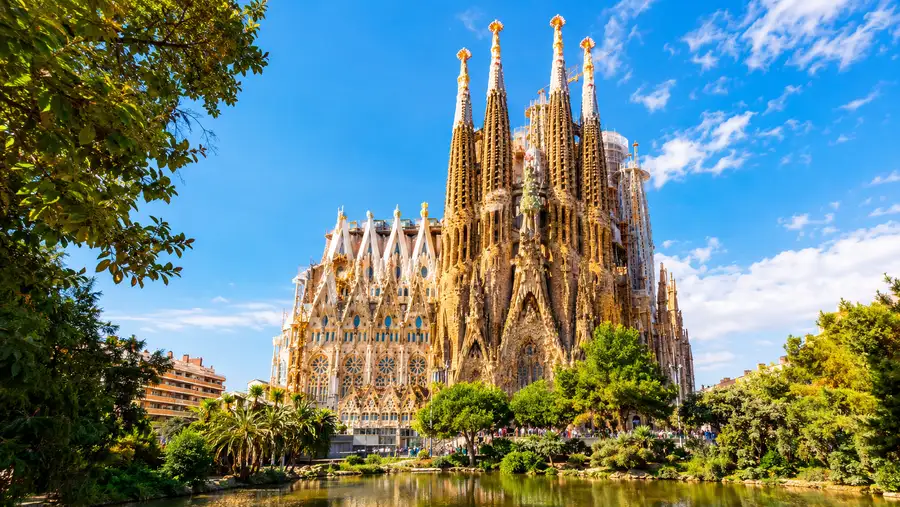
Finishing the grand building has required cutting-edge engineering. Giant pre-assembled stone panels arrive on site with steel reinforcement tensioned directly through the core. If you are curious about the remaining schedule, take a look at the projected Sagrada Familia completion date to see what remains before the scaffolds come down for good. The pandemic stalled work for almost two years, but the spires are climbing faster now than at any point in the past 140 years.
When you walk around the base, keep an eye out for these subtle design quirks that most tour groups walk right past:
- Stone reptiles: Look at the drainage spouts along the apse walls; they are shaped like lizards and snakes because medieval lore held that reptiles could not enter sacred ground.
- The two tortoises: At the base of the Nativity Facade's central pillars, one tortoise represents the sea while the other represents the inland mountains.
- Fruit-topped pinnacles: The lower parapets feature colorful Venetian mosaic baskets filled with stone figs, wheat, and grapes symbolizing seasonal harvest and communion.
- Working schoolhouse: Gaudí built a small wavy-roofed brick school on the corner of the lot for the children of the stonemasons working on site.
Frequently Asked Questions about sagrada familia history
Who designed Sagrada Familia originally?
Francisco de Paula del Villar designed the initial neo-Gothic plans in 1882. Antoni Gaudí took over the project in late 1883 and discarded almost everything except the crypt foundation.
Why was Sagrada Familia built in the first place?
A conservative Catholic bookseller named Josep Maria Bocabella founded the project as an expiatory temple. He wanted to build a sanctuary funded by private alms to counter the rapid spread of modern secular culture in Barcelona.
Where is Antoni Gaudí buried?
Gaudí is buried directly beneath the basilica floor inside the Sagrada Família crypt, specifically within the Chapel of Our Lady of Mount Carmel.
How tall will Sagrada Familia be when finished?
The central Jesus Christ spire will reach 172.5 meters (566 feet). Gaudí kept it precisely one meter shorter than Barcelona's Montjuïc hill out of religious respect for the natural landscape.
Quick Reference
- Ground broken: March 19, 1882
- Architect: Antoni Gaudí (1883-1926)
- Finished height: 172.5 meters
- Gaudí's burial: Lower crypt chapel
- Total planned towers: 18
Book your sagrada familia experience:
My Take
Stand on the corner of Carrer de Mallorca and Carrer de Sardenya for ten minutes without looking at your phone. You will see elderly locals walking their dogs right past the same stone carvings that people travel 10,000 miles to glimpse. That is the real magic of this place. It is not a dead museum locked behind velvet ropes. It is a living, loud, dusty construction site that has outlasted world wars, epidemics, and five generations of stonecutters. Get your ticket early, skip the midday tour bus crush, and spend an hour just reading the stone.
Read more about sagrada familia.