Sagrada Familia Completion Date: When Will It Be Finished?
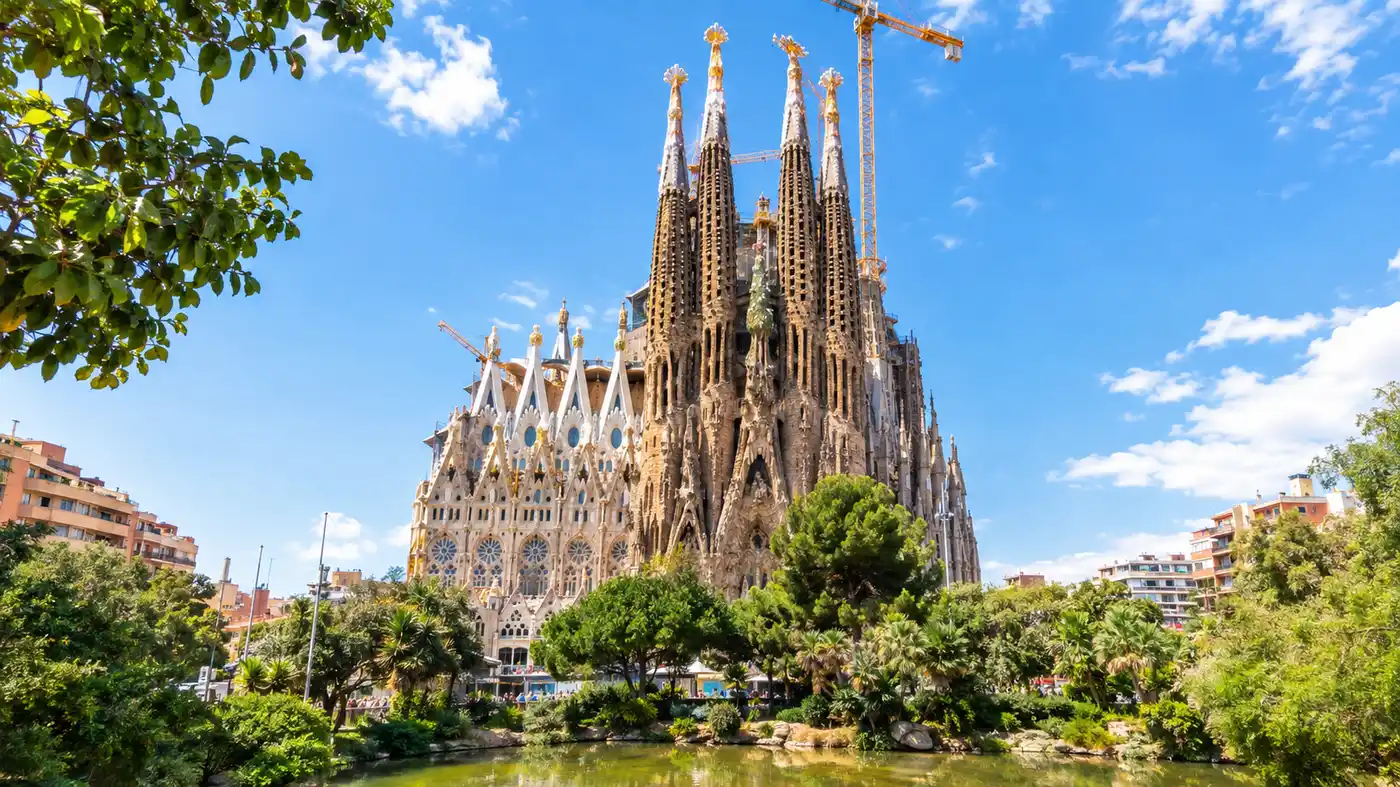
Step out of the underground metro station at Carrer de Provença and look up. You get an immediate neck ache, followed by the sudden sound of heavy diesel engines, hydraulic lifts, and stone cutters grinding away high in the clouds. I have watched cranes swing across this basilica skyline since my first visit in 2008, and back then, locals joked that our grandchildren might see it done. If you are planning a trip to Catalonia soon, you are probably tracking the official sagrada familia completion date with real curiosity. The short answer is complicated: parts of it will finish in 2026, but the actual, final chisel stroke will not happen for years after that.
Every traveler wants to know whether they will see a construction site or a finished cathedral when they arrive. For generations, visitors simply assumed it would never end. It became the world's most famous unfinished building, an ongoing spectacle where you pay an entrance fee to help fund tomorrow's mason work. Things have accelerated at a breakneck pace over the past decade. Computer modeling, high-tech off-site stone fabrication, and millions of tourist euros reshaped the calendar completely.
Book your sagrada familia experience:
The 2026 Sagrada Familia Completion Date: What Actually Finishes?
The year 2026 is etched into every tourist brochure right now. That specific date is not an engineering coincidence. It marks exactly 100 years since Antoni Gaudí died after being struck by an old number 30 tram on the Gran Via de les Corts Catalanes. At his death in June 1926, barely 15 to 20 percent of his overall vision stood above ground. For the centenary, the building board made an ambitious promise: the structural shell, specifically the towering central spire dedicated to Jesus Christ, will top out by 2026.
When the Jesus Tower finishes, the church hits its definitive height of 172.5 meters. Gaudí designed it to sit exactly 50 centimeters lower than Montjuïc hill because he strongly believed human handiwork should never surpass God's natural creation. Topping that tower involves hoisting a massive four-armed cross measuring 17 meters tall and 13.5 meters across. It will be glazed with white ceramic tile and thick glass. When the lights hit it from below at night, it will alter Barcelona's skyline forever.
Does that mean the entire basilica will be finished in 2026? No, not even close.
Calling the building done in 2026 is clever marketing. While the six central spires - the four evangelists, the Virgin Mary, and Jesus Christ - will all be complete, the exterior decoration, the massive entry staircase, and the sprawling Glory facade will still have teams of artists carving stone well into the 2030s. The COVID shutdowns in 2020 froze construction entirely for nine months and wiped out the ticket revenue that pays for the workers, pushing the true finish date back by at least four or five years.
Pro tip: If you want to see the central spire reach full height without missing the massive cross installation, aim to visit between late autumn 2025 and spring 2026 when exterior work peaks.
Why Is the Sagrada Familia Taking So Long?
People often ask me how a single church can take longer to build than the Great Pyramid of Giza. The foundation stone was set back on Saint Joseph's day in March 1882 under a different architect entirely, Francisco de Paula del Villar. Gaudí took over the project a year later, completely scrapped Villar's modest neo-Gothic drawings, and sketched out a forest of stone that baffled traditional 19th-century builders. How long has the Sagrada Familia been under construction? It has been over 142 years of active quarrying, hoisting, and carving.
Money has always been the main culprit. From day one, this project was declared an expiatory temple. That means neither the Spanish government, the Catalan regional authority, nor the Vatican contributes a single cent to its construction budget. Every square foot of sandstone, every pane of stained glass, and every engineer salary comes from private donations and the basic ticket fees paid at the gate. During the middle decades of the 20th century, money was non-existent, and work slowed to an agonizing crawl where two masons might spend an entire month shaping one decorative capital.
History got in the way too. In July 1936, right at the start of the Spanish Civil War, local anarchists broke into Gaudí's workshop inside the crypt. They smashed his intricate three-dimensional plaster models, burned his personal notes, and wrecked the original scale blueprints. Gaudí did not work like normal architects who left flat paper drawings; he worked through complex string weights and plaster casts. It took decades of painstaking work by architects like Francesc de Paula Quintana to glue those hundreds of plaster shards back together so anyone could figure out what Gaudí actually intended for the complex geometry above the nave.
Several major setbacks shaped the slow building progress over the decades:
- The Spanish Civil War (1936-1939): arson destroyed Gaudí's studio, original scale models, and early work plans, stalling construction for years.
- Extreme funding shortages (1940-1980): post-war poverty meant construction relied on tiny local church collections, keeping physical progress almost stagnant.
- Complex geometric stone cutting: until computer-aided design arrived in the late 1980s, stonecutters had to carve complex hyperbolic paraboloids by hand.
- The 2020 pandemic shutdown: total tourist site closures drained the temple's sole income stream, delaying structural work schedules by nearly five years.
I find it strange when people complain about the timeline. Great medieval cathedrals regularly took two or three centuries to build. Chartres took over 60 years, Cologne Cathedral took 632 years, and Milan's Duomo took almost six centuries. We are just lucky enough to live in an era where we can watch a high-Gothic-modernist wonder rise in real time with our own eyes.
The Glory Facade: The Final Battleground for Completion
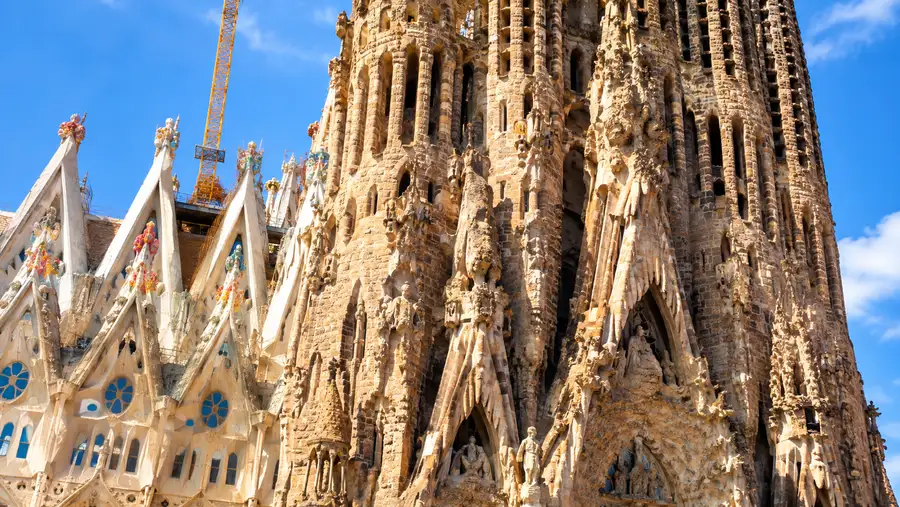
The real question mark around when the Sagrada Familia will be done centers entirely on the Glory facade. Located on the south side along Carrer de Mallorca, this is planned as the main entrance to the entire basilica. If you look at our detailed breakdown of the Sagrada Familia facades, you will see how wildly distinct this face is compared to the weathered Nativity front or the skeletal Passion portal.
This facade explains the human path through death, final judgment, and heavenly glory. Gaudí wanted it to feel overwhelming. It will feature massive stone columns, wild fiery bronze decorations, and towering spires of its own. It also features a monumental grand staircase that extends out from the main portal, bridging completely over Carrer de Mallorca to drop visitors into a planned pedestrian plaza.
Here lies the major municipal problem. Right where Gaudí planned that grand plaza sits a dense block of residential apartment buildings. Around 1,000 apartments and roughly 3,000 local residents face potential eviction if the city council greenlights the original staircase plan. Locals have formed neighborhood defense associations, hung angry banners from their balconies, and fought the temple board in municipal meetings for years.
City hall and the temple foundation have negotiated endlessly about where to compromise. Some suggest scaling down the stairs to a simple pedestrian walkway; others want the full, grand, elevated flight of steps built regardless of the local friction. Because the structural engineers cannot even start on the staircase until these legal disputes conclude, the Glory facade work will stretch well beyond the 2026 spire celebrations. Current realistic estimates place the finish date for this facade between 2030 and 2034.
Note: The sidewalk directly along Carrer de Mallorca remains heavily fenced off with construction hoardings, so do not expect clear photos of the southern side of the church right now.
Book your sagrada familia experience:
Sagrada Familia Construction Timeline: What Is Done and What Remains
It helps to visualize the sheer scale of what is finished versus what is currently buried behind netting. When you walk through the interior nave today, the experience feels complete and pristine. The leafy columns soar into the vaulted ceiling, the stained glass pours pure amber and cobalt light across the floors, and the acoustics during an organ recital will raise the hair on your arms. You can learn more about how Gaudí designed those towering vaults in our guide to Sagrada Familia history and facts. The exterior, however, is a moving target.
| Architectural Element | Height / Dimension | Construction Status | Expected Finish |
|---|---|---|---|
| Nativity Facade | Four 107m towers | 100% Complete | Finished in 1935 |
| Passion Facade | Four 112m towers | 100% Complete | Finished in 2018 |
| Tower of the Virgin Mary | 138 meters | 100% Complete | Crowned in Dec 2021 |
| Towers of the Evangelists | Four 135m towers | 100% Complete | Finished in Nov 2023 |
| Tower of Jesus Christ | 172.5 meters | Active Construction | Targeted for 2026 |
| Glory Facade & Staircase | Four 115m towers & portal | Early Foundations | Estimated 2030-2034 |
Looking at the table, you realize just how much heavy lifting wrapped up over the last few years. The crowning of the Virgin Mary tower with its 12-pointed glowing crystal star in late 2021 was an emotional milestone for the city. Then in November 2023, the four Evangelist spires - topped with the winged figures of the angel, the lion, the ox, and the eagle carved by sculptor Xavier Medina-Campeny - were officially blessed and illuminated.
Only the ultimate peak remains unbuilt. The stone used today is not even quarried in Catalonia. Masons source specific sandstone varieties from England, Galicia, and Poland to match the exact density and golden-grey coloration Gaudí picked out more than a hundred years ago.
Visiting During the Final Push: What to Expect in 2025 and 2026
If you plan to visit Barcelona over the next two years, do not worry that construction will ruin your trip. I hear this concern all the time from anxious travelers who picture scaffolding blocking the altar or dust covering their cameras. The interior of the church has been consecrated as a basilica since Pope Benedict XVI visited in November 2010. Inside, the space is entirely free of structural construction scaffolding. You walk into an astonishing, spotless forest of stone bathed in natural light.
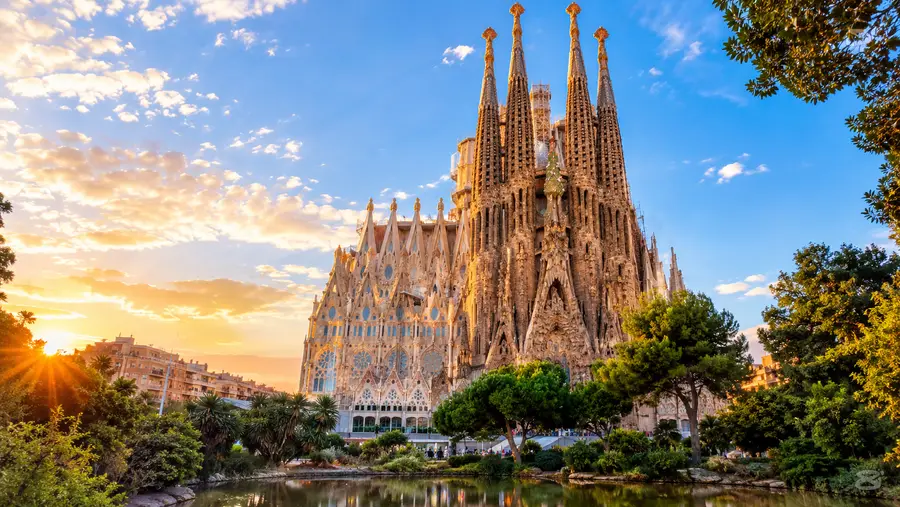
Outside, the experience feels vibrant rather than disruptive. You will hear the distant hum of machinery and see safety nets around the central spires. Cranes hover like long bird necks against the sky. Honestly, seeing it under construction has a unique magic that future generations will completely miss. When the last crane comes down, the building becomes a static museum piece. Right now, you are standing alongside history, watching a living medieval-style cathedral building site operate with modern twenty-first-century hydraulic engineering.
Here are a few practical realities for visiting while work continues:
- Tower access remains open: you can still book lift tickets up the Nativity or Passion towers; the heavy machinery sits mostly around the central Jesus spire.
- Book tickets weeks ahead: millions of travelers want to witness the building progress before 2026, so entrance times sell out days in advance during summer.
- Morning light is best for viewing progress: morning sun lights up the Nativity facade and allows clear views of the completed Evangelist towers without afternoon haze.
- Glory facade side is pedestrian-restricted: expect rerouted walking paths and narrower sidewalks along Carrer de Mallorca near the southern hoardings.
I always tell friends to walk around the perimeter twice. Once from the sidewalk right against the stone fences, where you can smell the damp cut stone, and once from Plaça de Gaudí across the duck pond. From across the water, the cranes shrink against the gigantic scale of the towers, and you can truly appreciate the terrifying ambition of Gaudí's sketches.
Quick Reference
- Structural spires finish: 2026
- Glory facade completion: 2030 - 2034
- Final building height: 172.5 meters
- Total time under construction: Over 142 years
- Inside the basilica: fully completed and open
The Bottom Line
Will the Sagrada Familia ever be finished? Yes, absolutely. The finish line is closer now than it has ever been in our lifetimes. The major engineering milestone of 2026 will cap off the Jesus Christ tower, fulfilling Gaudí's silhouette a full century after his death. But if you want to walk up the grand marble stairs of the southern Glory portal and run your fingers along the final bronze relief panels, keep your passport ready for 2032 or beyond. Do not wait for that final day to go. Book your tickets now, look past the swinging crane hooks, and soak in the raw energy of the world's greatest architectural vision taking its final, magnificent shape.
Book your sagrada familia experience:
Frequently Asked Questions about sagrada familia completion date
Is the Sagrada Familia finished right now?
No, the Sagrada Familia is not finished yet. While the vast interior was completed and consecrated in 2010, the tallest central tower and the main Glory facade are still actively under construction.
When will the Sagrada Familia be completely finished?
The main structural tower of Jesus Christ will finish in 2026 for the centenary of Gaudí's death. The final artistic elements, outer details, and the controversial grand staircase on the Glory facade will take until 2030 to 2034.
Why did the Sagrada Familia take so long to build?
It relies strictly on ticket sales and private donations rather than public church or state funding. Work was also halted by the Spanish Civil War, interrupted by lost workshop models, and delayed by the COVID-19 pandemic.
Can you visit the Sagrada Familia while it is under construction?
Yes, millions visit every year. The entire interior nave, the museum in the crypt, and two of the main tower climbs are fully open and safe for public visits.
Read more about sagrada familia.